
The three buckets of a real budget
Most figures that circulate only look at one of the three. A complete real estate marketing budget has these parts:
- Distribution: the portal, the unavoidable and largest expense.
- Production: tools to generate the material, plus the time you put in.
- Amplification: paid advertising, which is optional and comes last.
The common mistake is cutting production to afford amplification, when the correct order is the reverse.
The numbers in Spain today
| Item | Typical monthly cost | Avoidable? |
|---|---|---|
| Property portal | €150 to €400 | No, that is where demand is |
| CRM | €0 to €60 | Yes at first, with a spreadsheet |
| Design tool | €0 to €15 | Yes, free options exist |
| Content generation | €0 to €50 | Yes, with a one-off licence or free API |
| Social scheduling | €0 to €15 | Yes, by posting manually |
| Paid advertising | €0 to €300 | Yes, and worth delaying until the basics work |
With judgement, a small agency can stay at the portal and little else. Without it, reaching €700 a month in overlapping subscriptions is easy.
The cost that appears on no invoice
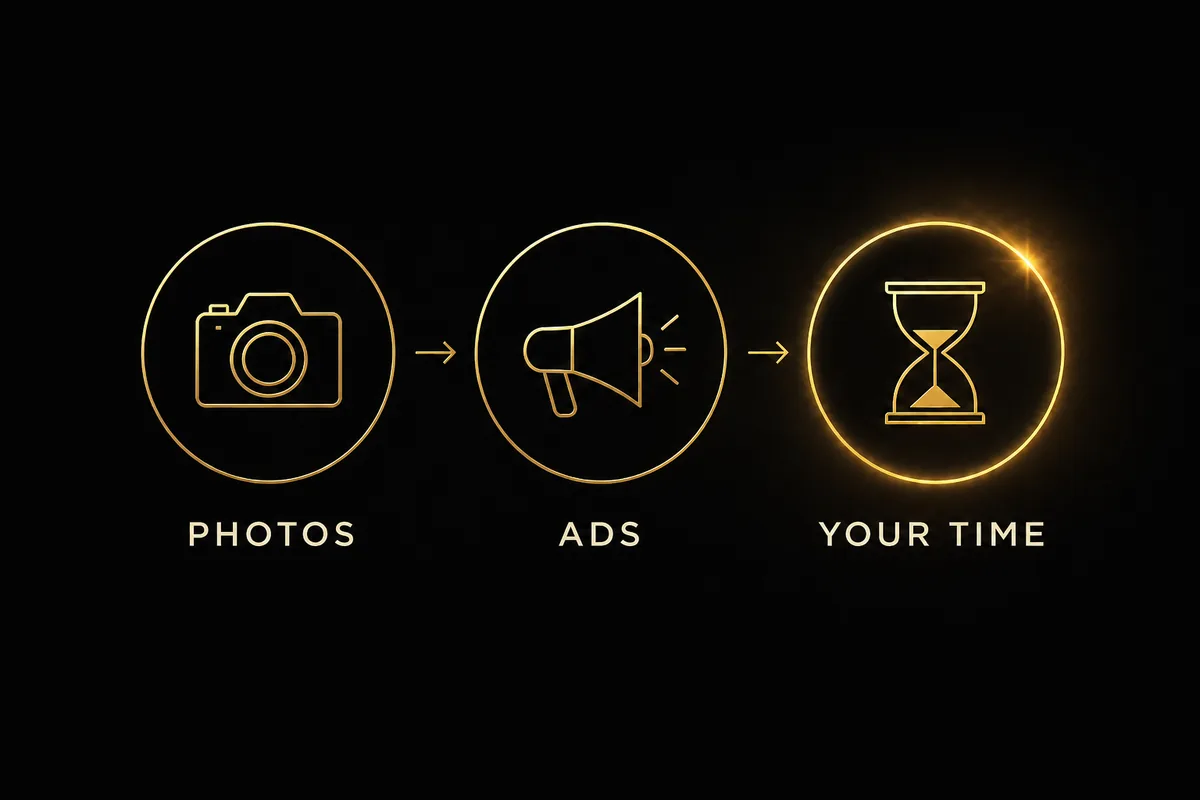
Here is the item almost nobody calculates and which is usually the largest of all: your own time.
Put whatever value you like on that hour. At any reasonable figure for an agent, those seven and a half hours exceed the monthly cost of practically any tool on the market. And unlike money, time does not come back.
From 30 minutes per property to under 5
SnapHouse generates the description, PDF, caption, carousel and Reel in one go. You can see the breakdown of hours recovered per property.
What order to spend in when the budget is tight
- The portal. That is where people are already looking. No debate.
- The photos. A modern phone and good light will do; a professional shoot pays for itself on expensive properties.
- Material production. This is where a tool gives you hours back.
- Consistency on one social channel. Costs time, not money.
- Advertising. Only once the above works.
Reversing that order is the most expensive mistake in the sector: paying to feature listings with weak photos and generic descriptions amplifies the problem instead of fixing it.
Work yours out in five minutes
Take a piece of paper and answer four questions: what you pay for the portal, what your subscriptions add up to, how many properties you handle a month, and how many minutes each one takes to prepare material for.
Multiply the last two and you have your monthly hours. Compare that against what automating most of that work would cost. In almost every case the answer is obvious, and it is surprising how rarely the sum gets done.
Get the hours back before the euros
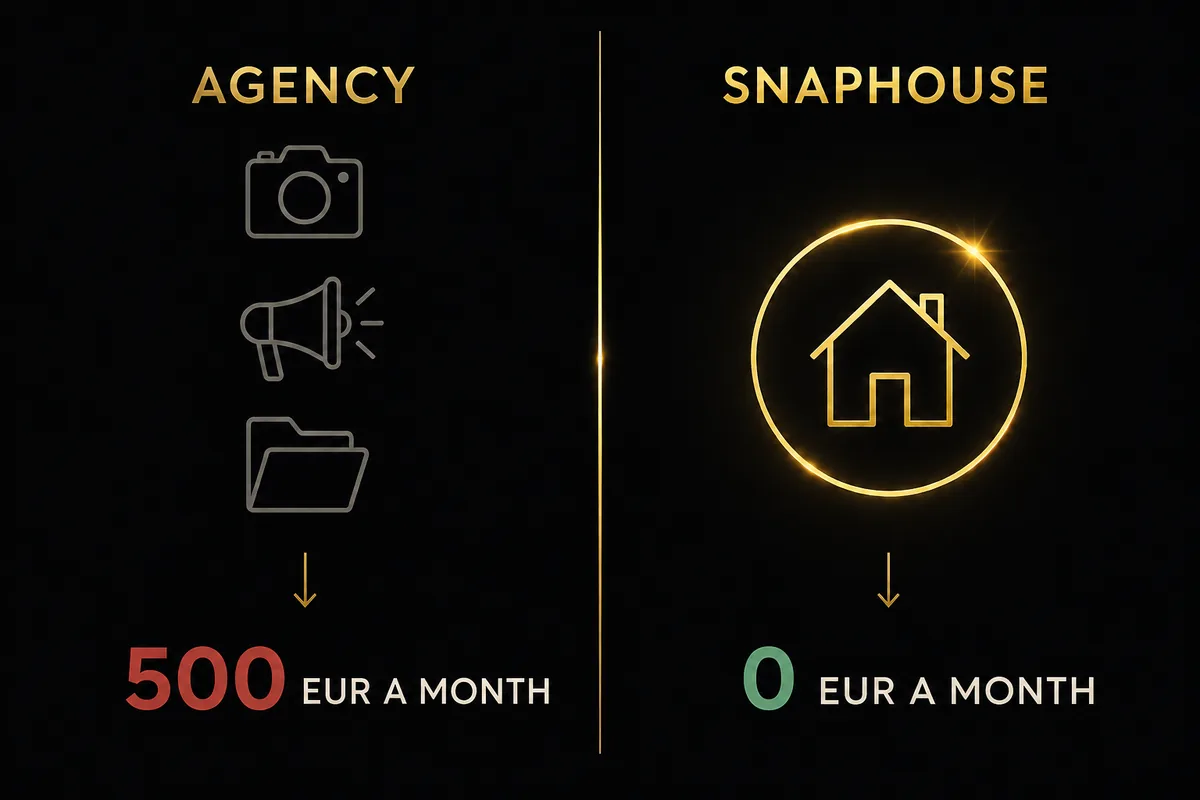
SnapHouse cuts each property's marketing material to under 5 minutes. Permanent licence from €845, no monthly fee, installation included.
Request a free demoNo commitment · Personalised demo · Support in Spanish and English
Keep reading: Real estate marketing on a zero budget: 10 strategies that work in 2026 and Real estate software without a subscription: one-off purchase vs monthly fee.
Frequently asked questions
What does marketing cost a small agency each month?
The unavoidable cost is the portal, typically €150 to €400 a month in Spain depending on area and plan. Everything else can stay near zero if chosen well, or add another €200 if subscriptions pile up.
What is the cost almost nobody calculates?
Your own time. Thirty minutes per property preparing material, across fifteen properties a month, is over seven hours. At any reasonable value for an agent's hour, that exceeds the cost of nearly any tool.
Is paid advertising on portals worth it?
Only once the listing itself is solid, with good photos and a considered description. Featuring a mediocre listing means paying for more people to see the problem.
Can you do real estate marketing with zero spend on tools?
On tools, almost: there are free options good enough to start and free AI APIs. What is not free is the portal or your time, and the second one weighs most in the real calculation.


